Challenge Race vs Scavenger Hunt vs Treasure Hunt: Choosing the Right Group Format in Phuket
Quick Answer: Which Format Fits Which Group
All three formats put teams of players into Phuket with a task and a clock. The differences are in structure, not spirit — and the structure is what determines whether your group ends the day energised or confused.
| If your priority is… | Book this |
| Competition, variety and a visible leaderboard | Challenge Race |
| Exploration, discovery and problem-solving | Scavenger Hunt |
| Narrative, teamwork and a shared payoff | Treasure Hunt |
| A group with a wide age spread | Treasure Hunt (ages 12–60) or Challenge Race |
| Indoor delivery or bad weather | Treasure Hunt (hybrid/indoor) or Challenge Race |
| A short, high-energy slot | Challenge Race |
| Sightseeing folded into the activity | Scavenger Hunt |
What Is a Challenge Race?
The Rush On Challenge Race is a multi-genre team competition, not a running race. Teams of 2 to 4 compete across five distinct rounds that test strategy, communication, creativity, coordination and teamwork.
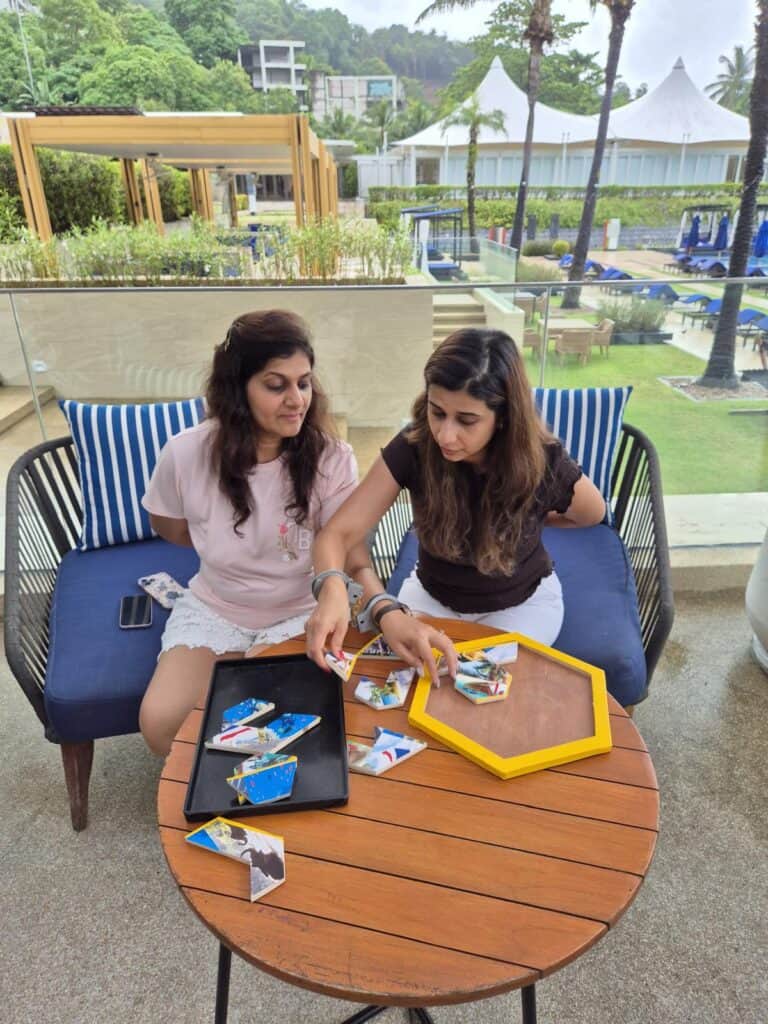
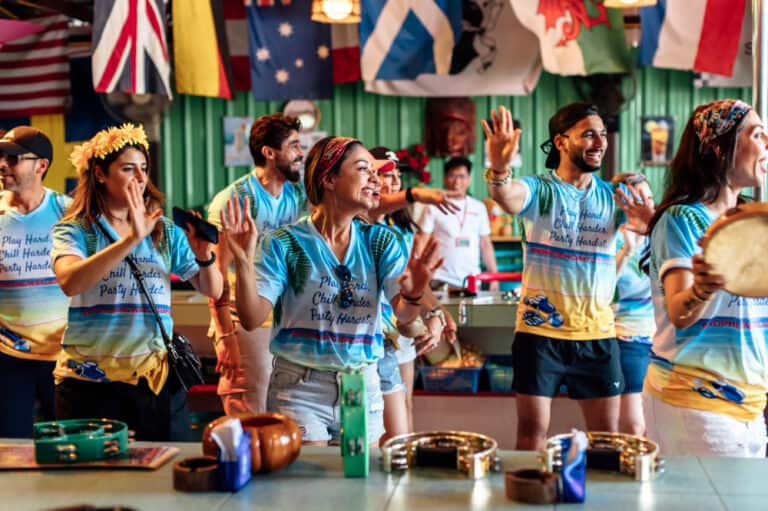
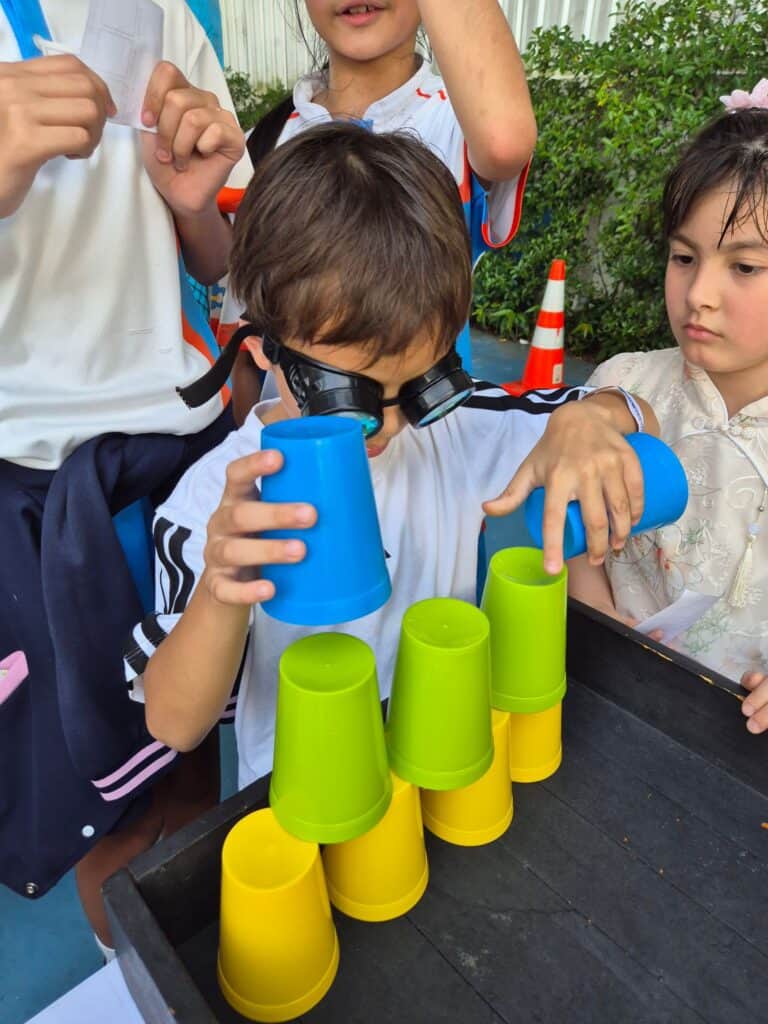
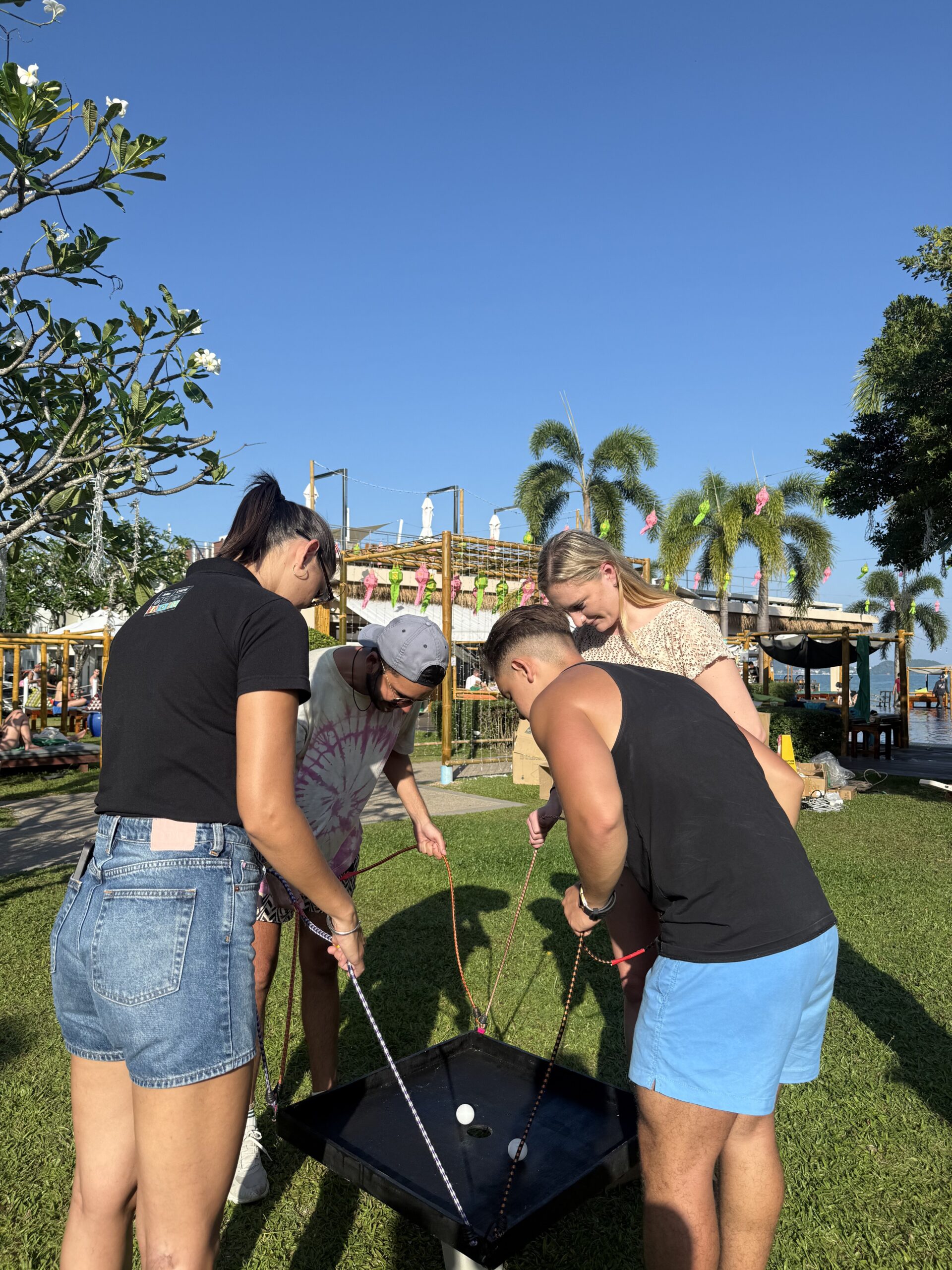
Rounds are drawn from four categories. Strategy and skill challenges include Pipe Line, Rope & Roll and Puzzler’s Path. Food and culture challenges include a Food Tasting Challenge, a Mystery Cocktail Challenge and a Culinary Challenge. Fun and performance challenges include the Funky Dance Challenge, Art & Craft and Balance & Deliver. Outdoor adventure challenges include Tyre’d and a Scavenger Hunt of Puzzles.
Everything runs through a digital web app with real-time scoring, timed checkpoints and live leaderboard updates. The race spans iconic island locations including Patong, Old Town, Rawai, Thalang, Karon, Chalong, Bang Tao and Kamala, and the My Front Yard Challenge Race variant runs across both indoor and outdoor challenges.
The defining feature: variety. No two rounds test the same skill, so nobody in the team is redundant.
What Is a Scavenger Hunt?
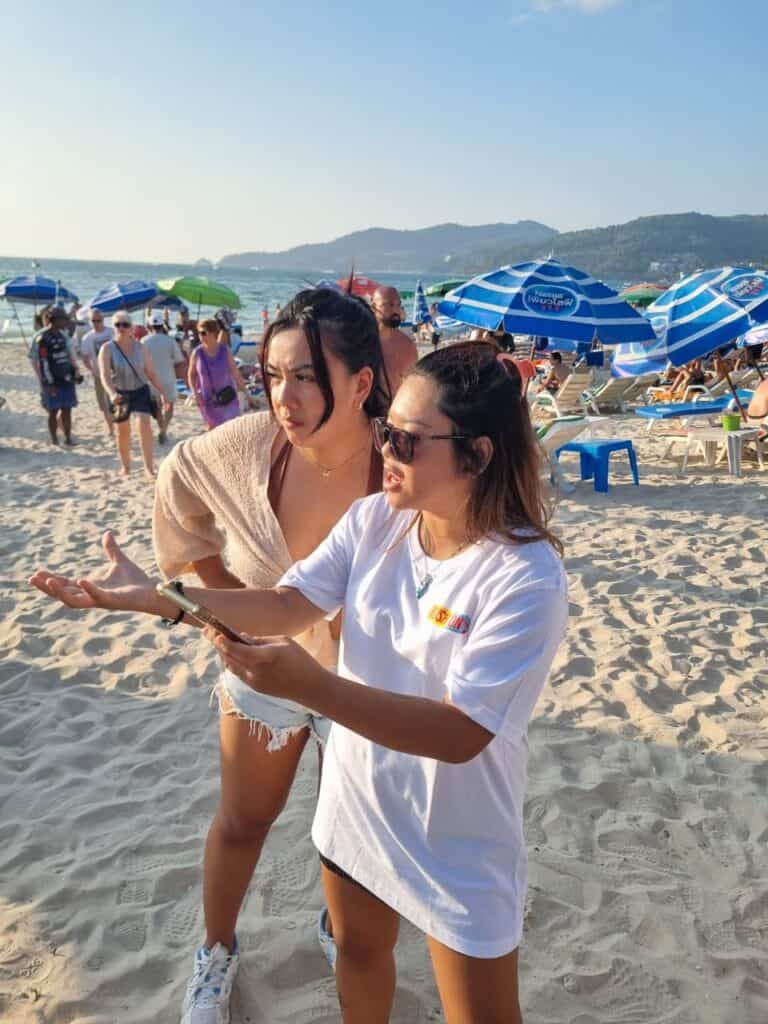
The Rush On Scavenger Hunt is a clue-based adventure built around discovery. Teams of 2–4 players receive a first clue and set off on an island-wide route, solving riddles, completing photo and video challenges, and unlocking hidden checkpoints along the way.
A standard hunt runs 2–3 hours depending on route and team pace, with custom durations available for private or corporate bookings. Routes cover iconic Phuket landmarks alongside offbeat locations, which is why it doubles as the most efficient sightseeing method on this list.
For business groups, the corporate scavenger hunt in Phuket version is positioned specifically around collaboration and communication outcomes.
The defining feature: exploration. The route is the content.
What Is a Treasure Hunt?
A Treasure Hunt in Phuket is a narrative-driven route where teams follow clues to checkpoints and mystery locations, complete missions, puzzles and photo challenges at each stop, and collect codes or tokens needed to unlock the final clue. It ends at a treasure chest and a winners’ announcement.
It is the most flexible of the three formats. Routes, themes, difficulty levels and duration are all customisable; it runs indoor, outdoor or hybrid; it scales from small teams to large groups; and it is designed for participants aged 12 to 60. It can be delivered as either a guided or a self-guided adventure.
Teams earn points on accuracy, creativity and time — a scoring mix that rewards thinking over speed, which changes the character of the competition considerably.
The defining feature: structure with a payoff. Everything builds to one final unlock.
Side-by-Side Comparison
| Challenge Race | Scavenger Hunt | Treasure Hunt | |
| Core mechanic | Five timed challenge rounds | Solve clues, find checkpoints | Collect codes to unlock a final clue |
| Team size | 2–4 players | 2–4 players | Scalable, small to large |
| Duration | See booking [VERIFY WITH CLIENT] | 2–3 hours standard | Customisable |
| Age range | Families to corporate groups | All ages, no fitness needed | Designed for ages 12–60 |
| Setting | Indoor and outdoor, multi-location | Outdoor, island-wide | Indoor, outdoor or hybrid |
| Scoring | Live leaderboard, timed checkpoints | Race to finish first | Accuracy, creativity and time |
| Tech | Digital web app | Map, clues, photo/video tasks | Map or booklet, codes and tokens |
| Skills tested | Strategy, communication, creativity, coordination | Problem-solving, collaboration, discovery | Collaboration, communication, curiosity |
| Sightseeing value | High | Highest | Moderate to high |
| Customisation | Round selection | Route and duration | Route, theme, difficulty, duration |
Choosing by Objective, Not by Name
If the objective is communication under pressure, the Challenge Race is the sharpest instrument. Timed rounds with a visible leaderboard force teams to allocate roles quickly, and the food, performance and strategy rounds surface different people as leaders.
If the objective is bonding and shared discovery, the Scavenger Hunt does more work. Teams spend the bulk of their time walking, talking and deciding together rather than executing timed tasks.
If the objective is inclusion across a wide group, the Treasure Hunt is the safest choice. It scales, it runs indoors when required, and its scoring rewards creativity rather than pace — which keeps slower participants in the game.
The full range of formats and how they map to outcomes is set out in team building activities in Phuket, and the objectives-led planning process is covered under team building Phuket.
Choosing by Group Type and Size
Corporate teams (10–100+). All three scale by splitting into competing teams. Larger headcounts favour the Treasure Hunt for its explicit scalability, or the Challenge Race where you want a single decisive winner. Programme design sits under corporate events in Phuket.
Friends and social groups (4–20). The Scavenger Hunt is the default: low setup, high sightseeing return, and 2–3 hours is the right length for a group that also wants an evening.
Families with mixed ages. Treasure hunts and challenge races both work; see family activities in Phuket for the mixed-age versions designed for ages 5 to 60.
Community and social groups. Any of the three, though the Treasure Hunt’s customisable difficulty makes it the least likely to leave anyone behind. Broader options sit under group activities in Phuket.
Can You Combine Formats?
Yes — and for full-day programmes it is usually the better answer. A morning scavenger hunt covering the exploration objective, followed by an afternoon of timed challenge rounds, gives a group two distinct energy states rather than three hours of the same one.
Rush On activities can be combined into a full-day experience and tailored to an event’s theme, goals or audience, which means the choice is not strictly either/or.
For outdoor-anchored programmes, the challenge-race mechanic also appears within the wider outdoor activities in Phuket range alongside Beat the Clock face-offs, fitness challenges and team bonding formats.
Send your group size, date and objectives to the Rush On team and the format recommendation comes back with the programme, not before it.
Frequently Asked Questions
What is a challenge race?
A challenge race is a multi-genre team competition where teams of 2 to 4 compete across five distinct rounds testing strategy, communication, creativity, coordination and teamwork. It is not a running race — scoring, timings and challenge briefs are managed through a digital web app with a live leaderboard.
What is the difference between a scavenger hunt and a treasure hunt?
A scavenger hunt is a race to find and unlock checkpoints by solving riddles and completing photo and video challenges. A treasure hunt is a narrative route where teams collect codes or tokens at each stop, building toward one final clue and a shared payoff.
Which format is best for corporate team building in Phuket?
All three work. Challenge races suit communication under time pressure, scavenger hunts suit collaboration and discovery, and treasure hunts suit large or mixed groups because they scale and their scoring rewards creativity as well as speed.
How long does each activity take?
A standard scavenger hunt runs 2–3 hours depending on route and pace. Treasure hunt duration is customisable to your programme. Custom durations can be arranged for private and corporate groups.
How many people are in a team?
Challenge races and scavenger hunts both run in teams of 2–4 players. Larger groups are divided into multiple competing teams. Treasure hunts scale from small teams to large groups.
Do participants need to be physically fit?
No. Challenge formats are designed to be inclusive and non-intimidating, testing coordination, strategy and teamwork rather than athletic performance.
Can these activities run indoors if it rains?
Treasure hunts run in indoor, outdoor and hybrid formats, and challenge races include both indoor and outdoor rounds, so wet weather changes the delivery rather than cancelling the booking.
Can we combine more than one format in a single day?
Yes. Activities can be combined into a full-day experience and tailored to your event’s theme, goals or audience